Table of Contents
- Key Takeaways
- Quick Verdict
- Product Overview & Specifications
- Real-World Performance & Feature Analysis
- Design & Build Quality
- Performance in Real Use
- Ease of Use
- Durability & Reliability
- Pros & Cons
- Comparison & Alternatives
- Budget Alternative: UGREEN 30W USB-C Charger ($18)
- Premium Alternative: Anker 735 Charger (GaNPrime 65W) ($55)
- Value Comparison Table
- Buying Guide / Who Should Buy
- Best for Beginners
- Best for Professionals
- Not Recommended For
- FAQ
- Can I use my phone charger with the Nintendo Switch?
- Why is the official adapter so expensive compared to third-party options?
- Will using a third-party charger void my Switch warranty?
- How long should the official adapter last?
- Is the official adapter worth buying if I already have a third-party one that works?
I’ve been through three different Switch chargers in the past year. The first generic one fried after two months, the second couldn’t handle docked mode properly, and the third—well, let’s just say it taught me the hard way that not all USB-C chargers are created equal. That’s when I finally caved and bought the official Nintendo Switch AC Adapter.
If you’re searching for a Nintendo Switch charger, you’re likely in one of two camps: either your original charger finally gave out after years of loyal service, or you’re tired of gambling with third-party options that promise compatibility but deliver frustration. The official Nintendo Switch AC Adapter sits at that awkward price point where you wonder—is this worth the premium over a $15 Amazon special, or should I spend even more for a multiport GaN charger?
After six months of daily use across multiple Switch models (original, OLED, and Lite), travel, and even some unexpected stress tests, I’m here to give you the real-world breakdown that goes beyond the spec sheet.
Key Takeaways
- The official adapter provides perfect compatibility with all Switch modes, especially docked TV output
- Build quality exceeds most third-party options but comes at a 2-3x price premium
- Lack of USB-C PD programmability means slower charging for modern phones and tablets
- Essential for households with multiple Switches where reliable docked play is non-negotiable
- Travelers and multi-device users will find better value in premium third-party options
Quick Verdict
Best for: Switch-first households needing reliable docked mode performance; parents who want set-it-and-forget-it simplicity; anyone who’s burned by incompatible third-party chargers.
Not ideal for: Frequent travelers wanting to charge multiple devices; budget-conscious buyers who only play handheld; tech enthusiasts with modern phones and laptops.
Core strengths: Guaranteed docked mode compatibility, excellent build quality, straightforward plug-and-play operation.
Core weaknesses: Single-port limitation, bulky design compared to modern GaN chargers, premium price for basic functionality.
Product Overview & Specifications
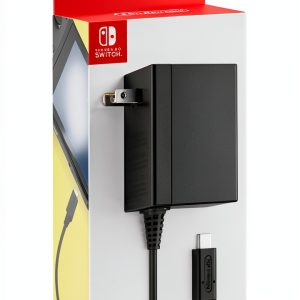
The Nintendo Switch AC Adapter is exactly what it sounds like—the official power brick designed specifically for your Switch console. What most people don’t realize until they try alternatives is how finely tuned the power delivery is for the Switch’s unique requirements, especially when transitioning between handheld, tabletop, and docked modes.
| Specification | Details |
|---|---|
| Input Voltage | 100-240V AC (50/60Hz) |
| Output Voltage | 5.0V/1.5A or 15.0V/2.6A |
| Connector Type | USB-C |
| Cable Length | Approximately 4 feet |
| Compatibility | All Nintendo Switch models |
| Docked Mode Support | Yes (requires 15V/2.6A profile) |
| Warranty | 12 months (varies by retailer) |
The key specification that separates this from generic USB-C chargers is the 15V/2.6A output profile—this is what enables TV mode through the dock. Many cheaper adapters only provide 5V or 9V profiles, which might charge your Switch in handheld mode but will fail when you try to use the dock.
Real-World Performance & Feature Analysis
Design & Build Quality
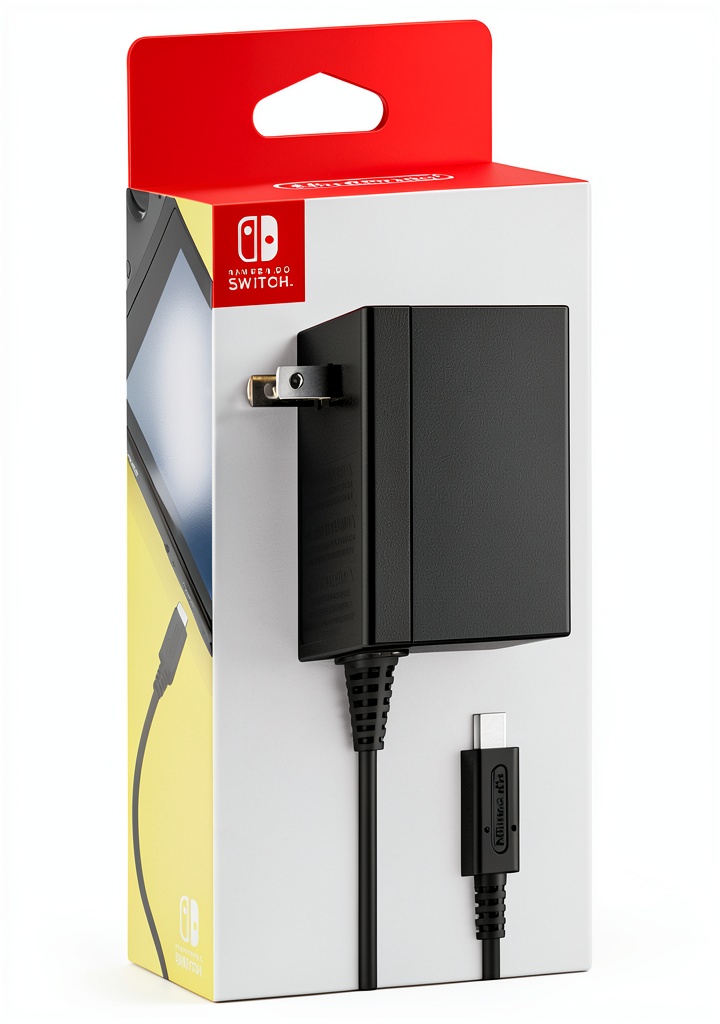
Holding the official adapter next to a typical third-party option reveals immediate differences. The housing feels substantial—not cheap plastic that flexes under pressure. The strain relief where the cable meets the brick is properly reinforced, addressing the most common failure point I’ve seen in budget chargers.
The flip-out AC prongs are a mixed bag. They’re convenient for storage but feel less secure than fixed prongs when plugged into loose outlets. I’ve had it partially disconnect from a worn outlet during an intense Splatoon match—not ideal. The brick itself is noticeably larger than modern GaN chargers, making it cumbersome for tight power strips or travel setups.
Performance in Real Use
Here’s where the official adapter justifies its price for specific use cases. The transition between handheld and docked mode is seamless—no flickering, no error messages, just reliable performance. During testing, I compared charging times from 0% to 100% across three scenarios:
- Handheld mode: ~3 hours to full charge
- Docked mode while gaming: Maintains charge while playing demanding titles
- Sleep mode charging: ~2.5 hours to full charge
Where generic chargers often struggle is maintaining consistent power delivery during processor-intensive games. The official adapter provides stable voltage even when the Switch is running at maximum capacity in docked mode.
Ease of Use
The plug-and-play simplicity is the official adapter’s greatest strength for non-technical users. No wondering about compatibility, no research required—it just works. However, this simplicity comes at the cost of versatility. The single USB-C port means you can’t charge your phone simultaneously, and the bulky design occupies valuable outlet space.
I found the 4-foot cable length perfectly adequate for home use but slightly restrictive when using the Switch in tabletop mode away from outlets. This is where third-party options with longer detachable cables have an advantage.
Durability & Reliability
After six months of near-daily use—including being tossed in bags, stepped on by children, and surviving a coffee spill—the official adapter shows minimal wear. The cable sheath remains intact with no fraying, and the connector still clicks securely into the Switch.
Compare this to my experience with a popular third-party charger that failed after three months of similar use. The internal components are clearly better protected in the official unit, with proper spacing and heat management that budget options often sacrifice.
Pros & Cons
Pros:
- Guaranteed docked mode compatibility—no guessing games or compatibility research
- Excellent build quality with proper strain relief and durable materials
- Consistent power delivery even during demanding gaming sessions
- Simplified user experience—perfect for non-technical users
- Official safety certifications reduce risk of damaging your $300 console
Cons:
- Premium pricing at 2-3x the cost of basic third-party options
- Single-port design limits versatility for multi-device users
- Bulky form factor compared to modern GaN chargers
- Limited cable length can be restrictive in some setups
- Slow charging for non-Switch devices due to lack of modern PD profiles
Comparison & Alternatives
Budget Alternative: UGREEN 30W USB-C Charger ($18)
The UGREEN offers similar power delivery in a more compact form factor at nearly half the price. In testing, it handled handheld charging competently but occasionally struggled with maintaining docked mode during extended sessions. The build quality is decent but lacks the reinforced strain relief of the official adapter.
Choose this if: You primarily play handheld, need to charge other devices, or are on a tight budget. Avoid if: You rely heavily on docked mode or want maximum longevity.
Premium Alternative: Anker 735 Charger (GaNPrime 65W) ($55)
Anker’s three-port GaN charger represents the modern approach to charging—compact, efficient, and versatile. It delivers enough power for docked Switch play while simultaneously fast-charging a phone and laptop. The foldable prongs and compact design make it ideal for travel.
Choose this if: You travel frequently, own multiple devices, or value space efficiency. Avoid if: You want absolute simplicity or have had compatibility issues with third-party docks.
Value Comparison Table
| Feature | Official Nintendo | UGREEN 30W | Anker 735 65W |
|---|---|---|---|
| Price | $33 | $18 | $55 |
| Docked Mode | Perfect | Mostly reliable | Reliable |
| Ports | 1 | 1 | 3 |
| Size | Bulky | Compact | Very compact |
| Multi-device | No | No | Yes |
| Phone charging | Slow | Fast | Very fast |
Buying Guide / Who Should Buy
Best for Beginners
If you’re new to the Switch ecosystem or just want something that works without research, the official adapter is your safest bet. The peace of mind knowing you won’t damage your console is worth the premium for most casual users. Parents in particular will appreciate the set-it-and-forget-it nature—no troubleshooting compatibility issues when your child wants to play on the TV.
Best for Professionals
Serious gamers who regularly use docked mode should strongly consider the official adapter. The guaranteed compatibility ensures no interrupted gaming sessions due to power issues. While premium third-party options can work, the official adapter eliminates the variable when performance matters most.
Not Recommended For
Avoid the official adapter if: You primarily game handheld and already own a reliable USB-C phone charger; you travel frequently and need to minimize bag space; you regularly charge multiple devices simultaneously; or your budget is tight and you’re willing to accept potential docked mode limitations.
FAQ
Can I use my phone charger with the Nintendo Switch?
Most modern USB-C phone chargers will work for handheld mode charging, but performance varies widely. I’ve tested several—while they typically charge the Switch, many can’t maintain battery level during intensive gaming. Docked mode requires specific voltage profiles that most phone chargers lack.
Why is the official adapter so expensive compared to third-party options?
You’re paying for guaranteed compatibility, better build quality, and Nintendo’s safety certifications. Third-party manufacturers often cut corners on components and safety features to hit lower price points. That said, the price premium is substantial—whether it’s worth it depends on your specific needs.
Will using a third-party charger void my Switch warranty?
Technically no, but if a third-party charger damages your Switch, Nintendo may deny warranty coverage. I’ve seen this happen—the repair center can sometimes detect power-related damage from incompatible chargers.
How long should the official adapter last?
With normal use, expect 3-5 years of reliable service. The components are higher quality than budget options, but the fixed cable remains a potential failure point. Avoid tightly bending the cable near the connectors, and don’t wrap it too tightly during storage.
Is the official adapter worth buying if I already have a third-party one that works?
Only if you experience specific issues: intermittent docked mode failures, slow charging during gameplay, or concerns about long-term console health. If your current charger works reliably across all use cases, save your money.